
Our Service
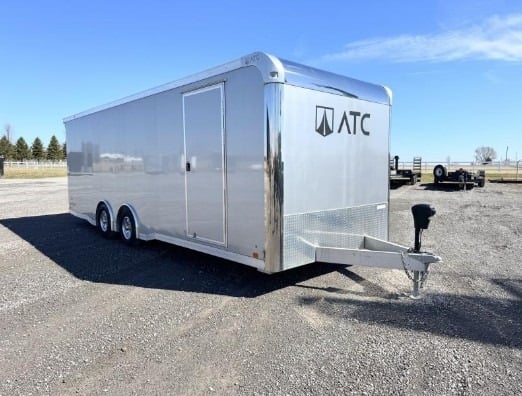
Luxx Trailer Service
Our trailer service department is dedicated to keeping your equipment safe, reliable, and road-ready. From expert brake repair, with our ASE-certified technicians, to electrical diagnostics, routine maintenance, accessory installation, structural repair and more, we offer complete care for every component of your trailer. View our service descriptions to learn more about the services we provide.
Whether you need preventative maintenance or major repairs, our skilled technicians deliver professional service to keep your trailer preforming at its best. Follow the link below to request service or call our service representative Dave at 260-768-7317 ext 2 with any questions.
Service Descriptions
Axles
We inspect, repair, and replace trailer axles to ensure safe and stable towing.
Bearings
Our technicians clean, repack, and replace trailer wheel bearings to prevent failure and extend component life.
DOT Inspections
We provide certified DOT trailer inspections to keep your equipment compliant and road-ready.
Fabrication
Custom trailer fabrication and welding services to meet your unique hauling and structural needs.
Fleet Maintenance
Comprehensive trailer fleet maintenance programs designed to reduce downtime and extend service life.
Insurance Claims
We work with your insurance provider to assess damage and complete trailer repairs quickly and professionally.
Recall Inspection
We perform manufacturer recall inspections on trailers to identify and resolve safety or compliance issues.
Restorations
Complete trailer restoration services to bring your old or damaged trailer back to like-new condition.
Trailer Bearing Repack
Get a thorough cleaning and repacking of wheel bearings, replacement of grease seals, and a brake inspection.
-
Accessory Installation
Make an appointment with our service department today. Choose accessories to install on your favorite ride, including:
-
•
Winches
•
Plow kits
•
Skid plates
•
Hitches
-
Brakes
Our ASE-certified technicians take professionalism to the next level by offering courteous and knowledgeable service to all of our customers. Continually striving to master every aspect of trailer care, ASE technicians follow Motorist Assurance Program Uniform Inspection Guidelines for your trailer's braking system to assure safe, smooth hauling.
When your mechanic is wearing the ASE patch, don't expect to get to know him—you won't be back in a long time! That's because our ASE technicians do the job right the first time. They inspect the following braking components:
Disc Brakes:
-
•
Disc brake rotors and pads
•
Calipers and hardware
Drum Brakes:
-
•
Brake drums and shoes
•
Wheel cylinders
•
Return springs
Parking Brake:
-
•
Cables
Hydraulic System:
-
•
Master cylinder
•
Brake fluid and hoses
•
Power booster
Your trailer's brake system is a culmination of over 100 years of technological innovation, transforming crude stopping mechanisms into dependable and efficient equipment. While brake systems vary by make and model, the basic system consists of disc brakes in front and either disk or drum brakes in back. Connected by a series of tubes and hoses, your brakes link to each wheel and to the master cylinder, which supply them with vital brake fluid (hydraulic fluid).
We can summarize all of your braking equipment into two categories, Hydraulics and Friction Material:
-
Hydraulics
Master Cylinder: The master cylinder is like a pressure converter. When you press down on the brake pedal (physical pressure), the master cylinder converts this to hydraulic pressure, and brake fluid moves into the wheel brakes.
Brake Lines and Hoses: Brake lines hoses deliver pressurized brake fluid to the braking unit(s) at each wheel.
Wheel Cylinders and Calipers: Wheel Cylinders surrounded by two rubber-sealed pistons connect the piston with the brake shoe. Push the brakes and the pistons stop and the shoes pushes into the drum. Calipers squeeze brake pads onto the rotor to stop your car. Both components apply pressure to friction materials.
Friction Materials
Disc Brake Pads and Drum Brake Shoes: A disc brake uses fluid (released by the master cylinder) to force pressure into a caliper, where it presses against a piston. The piston then squeezes two brake pads against the rotor, forcing it to stop. Brake shoes consist of a steel shoe with friction material bonded to it.
How It Comes Together:
When you first step on the brake pedal, you are triggering the release of brake fluid into the system of tubes and hoses, which travel to the braking unit at each wheel. You actually push against a plunger in the master cylinder, releasing fluid. Brake fluid can't be compressed. It moves through the network of tubes and hoses in the exact same motion and pressure that initiated it. When it comes to stopping a heavy steel machine at high speed, this consistency is a good thing. The performance of your brakes can be affected when air gets into the fluid; since air can compress, it creates sponginess in the pedal, which disrupts consistency, and results in bad braking efficiency. "Bleeder screws" (located at each wheel cylinder) remove unwanted air in your system.
A trailer without functioning brakes is dangerous. In many cases, warning signs will tell you if your car's brakes may need service.
Warning signs include:
-
•
Squealing or grinding noises when using brakes. This could mean your brakes need to be adjusted or that your brake pads are worn and need replacement.
•
Your dashboard's Anti-lock Braking System (ABS) light turns on. This indicates that your brake fluid is low. You may have a leak in your brake line. Get it inspected.
•
While braking, your trailer pulls to one side. This means that your brakes need adjustment, there is brake fluid leakage, or your brakes are worn out and need replacement.
•
Your brakes are hard to press down or feel "spongy." Usually this means air has gotten into your brake lines or you may have low brake fluid.
•
When applying your brakes, your steering wheel, brake pedal, or entire trailer begins to shake. If this happens, your brake rotors could be warped and need replacement.
When you notice any brake warning signs, contact our professional staff by phone, or email, immediately and we'll take care of it.
-
Electrical
Your trailer depends on a properly working electrical system. Four main parts make up this system, and they must work together effectively. These include:
-
Batteries: Your vehicle's battery provides the electricity needed to start the engine. We recommend checking your battery with every oil change and replace it every three or four years.
Alternator: After starting your engine, your alternator takes over and generates power for the electrical system and recharges the battery. The electric system powers headlamps, light bulbs, and other electrical accessories.
Starter Motor: Your starter motor converts electrical energy into mechanical energy used to start your engine. Basically, once you turn your ignition, the starter cranks the engine to start your vehicle. As a general rule, test your starter every spring to make sure it draws the right amount of current.
Wiring: The wires in your electrical system connect the battery to the starter motor, the alternator to the battery, and the alternator to the starter. These large wires transmit several hundred amperes during cranking.
What can you do at home to help extend electrical system's life?
-
•
Clean off your battery and the connections once a month.
•
When purchasing a new battery, buy the same kind of battery and amps as the old one.
•
Turn off your vehicle's radio when the engine is not running to preserve your battery.
•
If your vehicle needs a jump-start, use a car that is shut (not running). And remember to jump your vehicle with a battery with the same or lower voltage.
If you are having trouble with your vehicles electrical system and need a professional opinion, we are here to help. Our technicians provide quality service in for your electrical system repairs. Give us a call, email, or stop by today.
-
Routine Maintenance
Full tune-ups are available year-round on all vehicles. Keep your machine running smoothly and extend its longevity. A full tune-up includes fluid changes, lubrication, adjustments, electrical maintenance, carburetion, a safety check, an overall performance check, and everything your vehicle needs to run smoothly.
Service Request
Fill out the form to request service and a member of our team will get back to you as soon as possible. Our service hours are Monday through Friday from 6:30am to 3pm and we are closed on Saturday and Sunday. An * indicated a required field.
Request Parts
Need parts? Follow the link to fill out the form or call our service representative Dave at 260-768-7317 ext 2 and he will be happy to help you find the parts you need to keep your operation running smoothly.
Contact Us
Send Us a Message
Contact us with any questions about our sales, rentals, or services. Whether you’re looking for expert advice, scheduling maintenance, or exploring financing options, we are here to help you. Contact us today or visit us in person!